
Your no-nonsense guide
Here's what you need to know about AI and Automation. No fluff, no hype; just the info you need to make the right choice for your business.
Your no-nonsense guide
‘AI’: Beyond the Hype
Here's what you need to know about AI and Automation. No fluff, no hype; just the info you need to make the right choice for your business.
AI Workflow Automation: A Practical Guide
Your team spends hours every day copying data between systems, chasing approvals, formatting reports, and doing work that should take seconds. AI workflow automation connects your tools, eliminates manual handoffs, and lets your people focus on the work that actually requires human judgement. Most projects go live within 2–4 weeks and pay for themselves within 3 months.
AI Voice Agents: A Practical Guide
We build AI voice agents that handle inbound and outbound calls 24/7 — answering questions, booking appointments, qualifying leads, and processing payments without a human agent in the loop. Our clients reduce call handling costs by 70–90% while cutting response times from minutes to under two seconds, even at 3am.
AI Answering Service: A Practical Guide
We build AI answering services that handle every inbound call for your business — answering questions, taking detailed messages, booking appointments, and qualifying leads 24 hours a day, 365 days a year. Small businesses using our service recover an average of 3–5 missed leads per week that would otherwise have gone to a competitor.
AI Email Automation: A Practical Guide
Businesses send and receive over 300 emails per day on average. Most email "automation" is just templates and drip sequences — fire-and-forget messages that can't read, understand, or act on what comes back. Real AI email automation reads inbound messages, classifies intent, pulls customer context from your CRM, drafts intelligent responses, and routes or sends them — without a person copying and pasting between tabs.

AI Receptionist: A Practical Guide
We build AI receptionists that answer calls, qualify leads, book appointments, and route enquiries — 24/7, in your brand voice. Most clients see 40–60% of calls handled without human intervention within the first week.
Project Management Automation: A Practical Guide
We build AI automation that handles status updates, resource tracking, report generation, and deadline monitoring — eliminating the 54% of project management time currently lost to admin. Clients receive reports 3–5x faster and PMs get back 15–20 hours per week.
HR Automation: A Practical Guide
We build AI systems that screen CVs, automate onboarding workflows, answer policy questions, and manage leave requests — cutting recruitment admin by 30–40% and saving 15–20 hours per new hire. Your HR team focuses on people, not paperwork.
Customer Service Automation: A Practical Guide
We build AI-powered customer service systems that handle ticket routing, draft contextual responses, and escalate complex issues to your team — reducing first-response time by 60–80% while keeping a human in the loop. Most clients see routine ticket volume drop by 30–50% within the first month.

AI Lead Generation: A Practical Guide
We build custom AI pipelines that find, enrich, score, and engage your ideal prospects automatically — at a fraction of the cost of off-the-shelf SaaS stacks. Most clients see their qualified pipeline grow 3–5x while their sales team spends time closing instead of prospecting.
Accounting Automation: A Practical Guide
We build AI automation that handles invoice processing, expense categorisation, bank reconciliation, and management reporting — so your finance team stops spending 30% of their time on manual data entry. Most clients see 70% faster processing with 90%+ first-pass accuracy and ROI within 3–4 months.
What is AI Automation? A Complete Guide

Is AI Coming to Steal Your Job?
The call came in January. A distribution firm’s CFO watched a vendor demo an AI system that promised to "automate the finance function end-to-end." By March, the company had cut twelve people from a 60-person accounting team. By August, the remaining staff were working weekends to clean up errors...
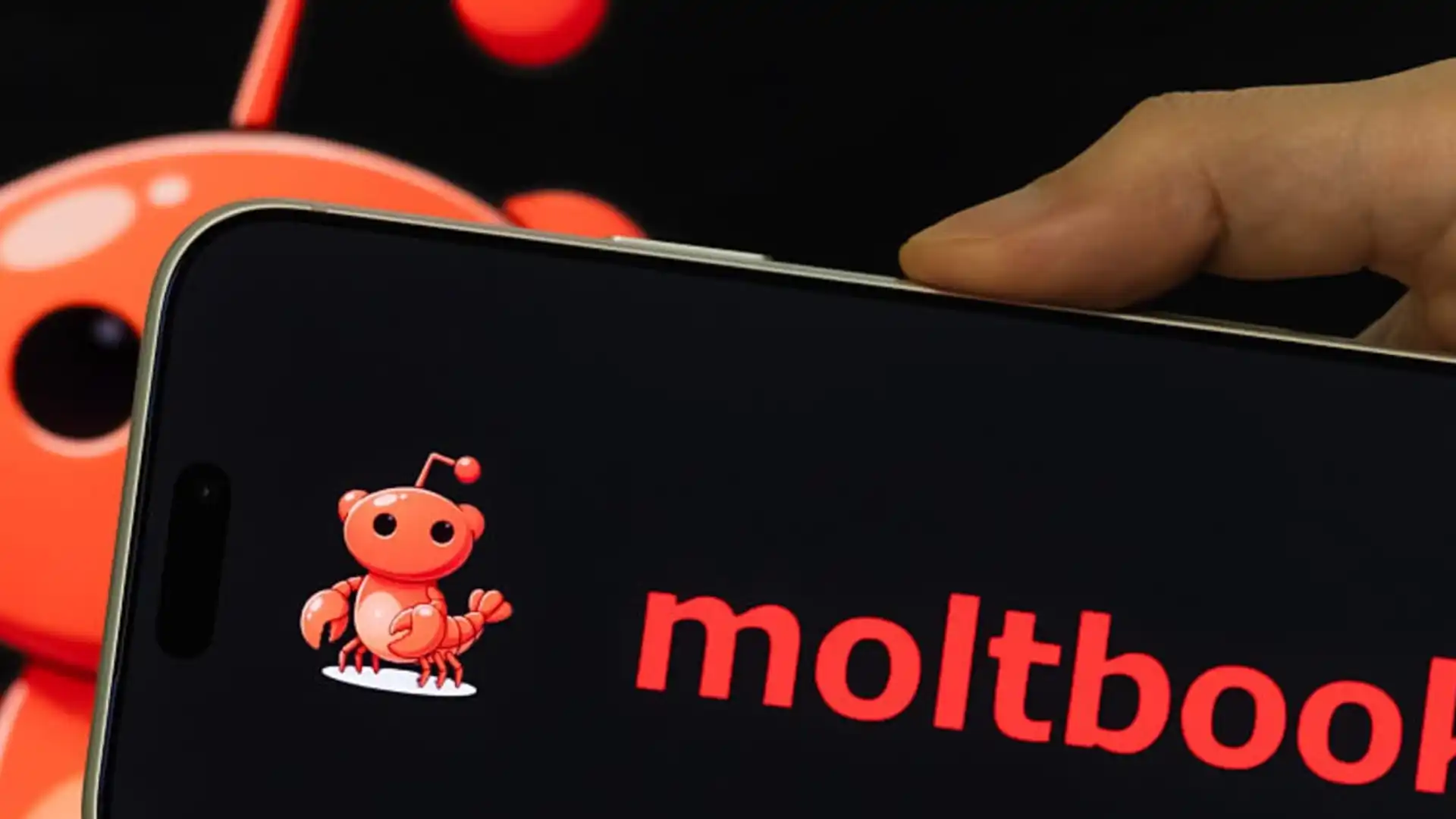
Moltbook - Social Media for AI
Picture a social media platform where nobody argues about politics, nobody posts what they had for breakfast, and absolutely zero humans complain about the algorithm. Welcome to Moltbook. This isn't your typical social experiment. Moltbook is a digital petri dish where AI bots hang out, chat, for...

Adapt or Die: AI and the 90s 'dot-com' Bubble
Picture this: It's 1999. Your competitor just launched a website and mentioned it in every ad. Your customers are asking for your URL. Your board wants to know your "internet strategy." Sound familiar?

Stop Buying Leads. Start Converting Them.
Why 'Speed-to-Lead' Is the Missing Architecture in Most Businesses
Secure Intelligence: Why Your Business Needs a Private AI Brain

HubSpot CRM AI: Native Features vs Custom Automation
HubSpot has been adding AI features at a rapid pace. Breeze Copilot, AI assistants, automated responses - the platform now offers genuine intelligence built right in. But here's what most guides won't tell you: sometimes the native tools are exactly what you need, and sometimes they're not even close. The problem isn't the technology. It's the mismatch between what platforms promise and what operations actually need. Most teams have been burned by tools that worked in the demo but broke in production, or solutions that solved the wrong problem elegantly. This isn't a feature comparison. It's a framework for thinking about which approach fits your specific situation - because the right answer depends entirely on what your customer service operation actually looks like.

How to Use AI for Automation (Without Breaking What Already Works)
You've probably heard the pitch. AI will transform your business. Unlock potential. Revolutionise operations. The reality is quieter, and more useful: AI is a tool that moves information between systems without someone copying and pasting. That's it. The question isn't whether AI is impressive. The question is whether it fits your actual workflow.
AI Agents Aren't Digital Employees. Here's What They Actually Are.
If you've been following AI developments, you've probably heard the term 'AI agent' more times than you can count. Vendors promise autonomous systems that work like employees. Marketing copy implies these tools can run your operations independently. In practice, most of this is noise. According to MIT Technology Review, 95% of businesses that tried using AI found zero value. A G2 survey found 70% of buyers felt the public narrative about agents is overhyped compared to actual results. IBM researchers described current agents as 'junior staffers who work quickly, confidently and often incorrectly, requiring constant review and cleanup.' This article cuts through the hype. If you're a business owner or manager trying to understand what agents actually are — and whether they're relevant to your operations — this is a practical starting point.

Knowledge Graphs Explained: Why They're Transforming Enterprise AI
As organisations deploy AI across critical business functions, a fundamental challenge emerges: how do you ensure AI systems reason accurately about complex, interconnected information? Knowledge graphs are emerging as the answer, providing the structured foundation that transforms AI from probabilistic guessing into reliable, explainable intelligence.
Claude Code: More Than a Coding Tool, It's Your Personal AI Operating System
When Anthropic launched Claude Code, it was marketed as an agentic coding tool. But something unexpected happened: people started using it for everything except coding. Research. Writing. File management. Business automation. As one commentator put it, Claude Code isn't a coding tool—it's a personal assistant that happens to know how to code.

What Is Supabase and Why It Might Replace Your Entire Backend
Is Superbase the missing piece of your development pipeline? As an open-source backend-as-a-service with full authentication and PostgreSQL built-in it, it could be the only backend you ever need.

Stop Buying Hours. Start Buying Outcomes.
Most businesses believe growth requires more people, more money, and more management. That belief is quietly becoming your biggest bottleneck. Meanwhile, the leanest companies are growing by installing systems instead of stacking headcount. They're buying outcomes, not hours. And they're scaling without the chaos.