

Picture this: It's 1999. Your competitor just launched a website and mentioned it in every ad. Your customers are asking for your URL. Your board wants to know your "internet strategy." Sound familiar?
'AI' isn’t a strategy: tools change, business fundamentals don’t
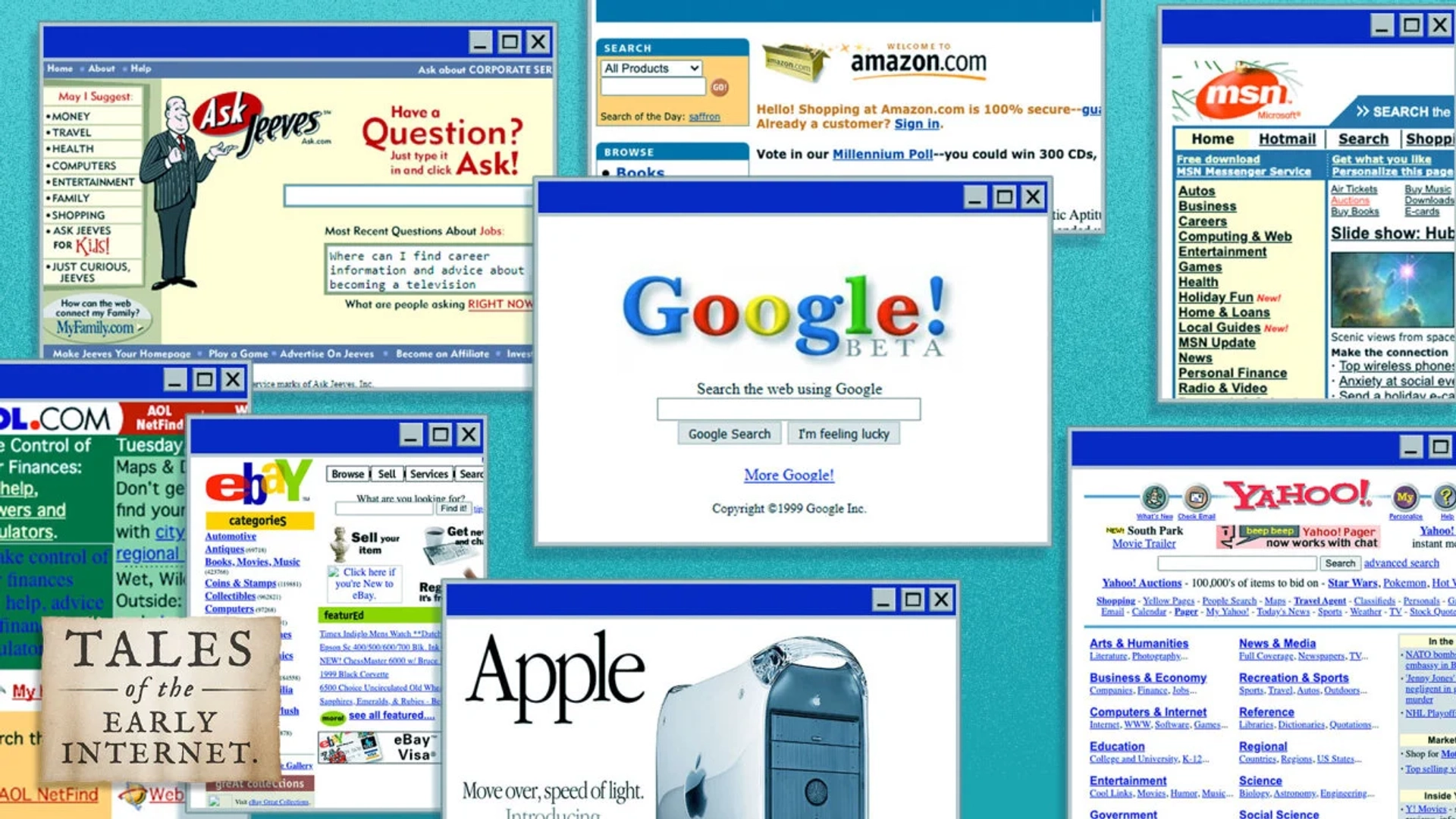
The Dot-Com Echo: Why a Web Presence Felt Mandatory in the 1990s
The late 90s created the first great digital FOMO. The Nasdaq surged 572%, with venture capital hitting $100 billion annually by 2000. Every business magazine screamed the same message: get online or get left behind.
The Gold Rush Mentality
Companies weren't building websites because they had a plan. They were building them because everyone else was. The logic was simple and terrifying: what if this internet thing actually mattered?
computer adoption data. Real people were really going online. But most companies had no idea what to do once they got there.
So they did what felt safe. They built digital brochures. They put their phone number on a webpage and called it e-commerce. They hired consultants who promised that "being online" was enough.
The Expensive Lesson
We know how this ended. The Nasdaq fell 77% between March 2000 and October 2002. dot-com failure rates. Companies like Pets.com and Webvan burned through hundreds of millions building infrastructure for customers who never showed up.
The survivors weren't the ones with the flashiest websites. Amazon endured a 90% stock drop but had actual customers buying actual products. eBay created a marketplace people genuinely needed.
The Real Lesson Wasn't About Technology
The dot-com crash taught us something crucial: presence isn't strategy. Having a website didn't guarantee success any more than having a phone number did.
But here's what's interesting. The companies that treated the web as a tool—not a magic solution—often found genuine value. They used it to serve existing customers better. To reach new markets more efficiently. To solve real problems.
The ones that survived the crash weren't the loudest about being "internet companies." They were just companies that happened to use the internet well.
Today, we're hearing that same urgent whisper again. Except now it's about AI.
AI is no longer optional infrastructure—it’s your new baseline
AI as Infrastructure
Something shifted in 2024. AI stopped being the shiny new toy that tech teams played with on weekends.
It became infrastructure.
Walk into any Finance department today. They're not debating whether to use AI for invoice processing. They're comparing vendors. Sales teams aren't wondering if AI can help with lead scoring. They're measuring which tool gives them better conversion rates.
The conversation changed from "Should we?" to "How fast can we?"

From Experiment to Expectation
Remember when having a website was optional? When email was a nice-to-have? We're watching the same transition happen with AI, but compressed into months instead of years.
Your competitors aren't waiting. While you're forming committees to discuss AI strategy, they're already automating their customer service. While you're requesting budget for pilot programs, they're scaling AI across HR, Content, and CRM.
The window for "wait and see" is closing.
The Real Stakes
This isn't about keeping up with trends. It's about staying relevant.
Companies that treat AI as optional are making the same mistake as those who ignored mobile or cloud computing. They think they have time to catch up later.
They don't.
The businesses winning today aren't the ones with the biggest AI budgets. They're the ones who started integrating AI into their actual work. Not moonshot projects. Not innovation labs. Real work that customers pay for.
What Changed
AI finally got practical. The tools work reliably enough to bet your business on. The costs dropped low enough to justify everywhere, not just high-value processes.
More importantly, your customers started expecting it.
They want instant responses. Personalized experiences. Predictive insights. They don't care if you're philosophically opposed to AI or worried about the implications. They care about results.
The companies delivering those results are the ones embracing AI as core infrastructure, not optional enhancement.
Your choice isn't whether to adopt AI. It's whether you'll lead the transition or scramble to catch up.
'Adapt or Die' —or compete permanently in slow motion.
Why AI Is Becoming Non-Negotiable
Here's what's happening right now. Your competitors are already using AI to handle customer service inquiries faster than your team can respond. They're automating their content creation while your marketing team burns weekends on blog posts. Their sales teams have AI assistants qualifying leads while yours are still playing phone tag.
This isn't about keeping up with trends anymore. It's about basic operational reality.
The Speed Gap Is Real
Companies using AI for core business functions are simply moving faster. They're processing more data, making quicker decisions, and scaling operations without proportional increases in headcount. Meanwhile, businesses still running on purely human workflows are discovering they can't compete on speed or cost.
The math is straightforward. If your competitor can handle 10x more customer inquiries with the same team size, they can afford to be more responsive, more available, and often cheaper. If they're using AI to optimize their supply chain or predict market shifts, they're making better decisions with the same information you have.
Beyond Efficiency: The Innovation Advantage
But speed is just the entry fee. The real competitive gap emerges in what becomes possible when routine work disappears.
Companies deploying AI effectively aren't just doing the same things faster. They're freeing up their teams to focus on strategy, relationship building, and creative problem-solving. Their employees spend less time on data entry and more time on the work that actually moves the business forward.
This creates a compound advantage. Better allocation of human talent leads to better products, stronger customer relationships, and more innovative solutions. The gap widens over time.

The Network Effect Problem
As more businesses adopt AI, the ecosystem around them adapts too. Suppliers expect AI-powered efficiency in procurement. Customers get used to AI-enhanced service levels. Partners assume you can integrate with their automated systems.
Eventually, not having AI capabilities becomes a compatibility issue. You're not just slower—you're harder to work with.
The companies that wait are finding themselves in an increasingly difficult position. They're competing against organizations that have fundamentally different cost structures and operational capabilities. That's not a gap you close with harder work or longer hours.
The question isn't whether AI will become essential to your industry. It's whether you'll be ready when it already is.
AI wins come from real problems solved, not flashy projects
What the Dot-Com Era Teaches AI Early Adopters
The dot-com boom feels eerily familiar. Wild valuations, revolutionary promises, and executives scrambling to appear "digital-first." But scratch beneath the surface and you'll find crucial differences that smart leaders need to understand.
The Familiar Pattern
Both eras share the same intoxicating narrative. Technology will change everything. First movers win big. Move fast or die. The pressure to adopt feels identical—boards asking why you don't have an AI strategy, competitors claiming breakthrough results, vendors promising transformation in months.
The hype cycles mirror each other perfectly. Remember when every company needed a website? Now it's every company needs AI. The underlying fear is the same: get left behind.

Where History Rhymes, Not Repeats
But here's where it gets interesting. The dot-com era was about building new infrastructure. Most companies literally didn't have email systems or basic websites. AI is different—it's enhancing existing processes, not replacing entire business models.
The internet required massive upfront investments. New servers, new teams, new everything. AI can start small. A customer service bot. Automated data analysis. Document processing. The barrier to entry is lower, but the complexity of doing it right is higher.
The Real Lesson: Infrastructure vs. Intelligence
The companies that survived the dot-com crash weren't the flashiest. They were the ones that understood the internet as a tool, not a magic solution. Amazon started by selling books better. Google organized information better. They solved real problems with new technology.
AI leaders should pay attention to this pattern. The winners won't be the companies with the most AI projects. They'll be the ones using AI to solve actual business problems better than anyone else.
What's Different This Time
Unlike the dot-com era, you don't need to rebuild your entire operation. You need to identify where intelligence can create genuine value. That's both easier and harder than building a website.
Easier because you can start anywhere. Harder because success requires understanding both your business and the technology. Most companies nail one or the other, rarely both.
The dot-com survivors built sustainable competitive advantages. AI leaders need to think the same way—not about adopting AI, but about using it to do things competitors can't match.
Treat AI like economics, not magic—value first, tech second.
A Practical Approach to AI Adoption
Here's what actually matters when adopting AI. Not the hype, not the fear - just the framework that separates winners from cautionary tales.
Start with Economics, Not Technology
The dot-com crash taught us something crucial. Companies like Pets.com burned through $300M+ in nine months because they ignored unit economics. They had the technology. They had the vision. They just couldn't make money.
AI adoption works the same way. Before you deploy that chatbot or implement that ML model, answer this: What specific business problem does this solve? How much does that problem cost you today? What's your path to positive ROI?
Phase 1: Readiness Assessment
Look at your data infrastructure. Not your AI strategy deck - your actual data. Is it clean? Accessible? Governed? Most AI projects fail here, not in the algorithm.
Phase 2: Pilot with Purpose
Make it small. Make it measurable. Amazon survived the crash by focusing obsessively on customer value, not flashy features. Your pilot should solve a real problem for real users.
Phase 3: Scale What Works
Make it small. Make it measurable. Amazon survived the crash by focusing obsessively on customer value, not flashy features. Your pilot should solve a real problem for real users.
Phase 1: Readiness Assessment
Look at your data infrastructure. Not your AI strategy deck - your actual data. Is it clean? Accessible? Governed? Most AI projects fail here, not in the algorithm.
Phase 2: Pilot with Purpose
Make it small. Make it measurable. Amazon survived the crash by focusing obsessively on customer value, not flashy features. Your pilot should solve a real problem for real users.
Phase 3: Scale What Works
Make it small. Make it measurable. Amazon survived the crash by focusing obsessively on customer value, not flashy features. Your pilot should solve a real problem for real users.
The Three-Phase Reality Check
Every AI implementation needs three things from day one: clear ownership, defined boundaries, and measurable outcomes.
Not because compliance says so - because chaos kills value.
Who owns the AI decision when it goes wrong? What data can it access? How do you measure if it's actually helping?
These aren't nice-to-have policies. They're survival basics.
The companies that survived the dot-com crash weren't the ones with the best technology. They were the ones with the best business fundamentals. The failure rate was actually lower than restaurants - but only for companies that focused on real value creation.
AI adoption follows the same pattern. The winners won't be the early adopters or the late majority. They'll be the organisations that treat AI like any other business investment: with clear goals, measured risks, and relentless focus on actual outcomes.
Start there. Everything else is just implementation details.
AI’s real power is responsibility: govern it or get governed.
Risks, Ethics, and the Road Ahead
Let's be honest about something. AI isn't just a productivity tool anymore. It's reshaping how we work, think, and make decisions.
That comes with real responsibility.
The Stakes Are Higher Now
Every AI system you deploy touches real people. Your customers. Your employees. Sometimes people who never opted in to be part of your AI experiment.
When your chatbot gives bad financial advice or your hiring algorithm screens out qualified candidates, those aren't just bugs. They're impacts on real lives.
The companies getting this right aren't the ones with the fanciest models. They're the ones asking hard questions upfront. What could go wrong? Who gets hurt if this fails? How do we know when to pull the plug?

Building Guardrails That Actually Work
Ethics policies look good on paper. But they mean nothing without systems to enforce them.
Smart companies are building review processes before AI touches customers. They're testing for bias, not just accuracy. They're tracking outcomes, not just outputs.
Your AI should have an audit trail. Every decision it makes should be explainable. Not because compliance demands it, but because your people need to trust what they're working with.
The Human Element Stays Critical
Here's what the AI evangelists won't tell you. The most successful AI implementations keep humans in the loop.
Not because the technology isn't good enough. Because humans catch things algorithms miss. They understand context. They know when something feels off, even if the metrics look fine.
Your customer service AI might nail 95% of interactions. But that 5% needs a real person who can think, empathize, and make judgment calls.
What This Means for You
AI governance isn't a nice-to-have anymore. It's table stakes.
Start small. Pick one AI application and build robust oversight around it. Learn what good governance feels like before you scale up.
Document everything. Not for the lawyers, but for your team. When something goes sideways, you need to understand why and fix it fast.
Most importantly, remember that AI amplifies what you already are. If your processes are broken, AI will break them faster. If your culture values shortcuts over quality, AI will take those shortcuts at scale.
The road ahead isn't about perfect AI. It's about responsible AI. The difference matters more than you think.